


Roppongi Art Night 2026
Aya Rodriguez-Izumi, "Conceptual flag for an intersecting future", "Noboru"
October 30 (Fri), 2026 - November 16 (Mon), 2026
- Upcoming Events
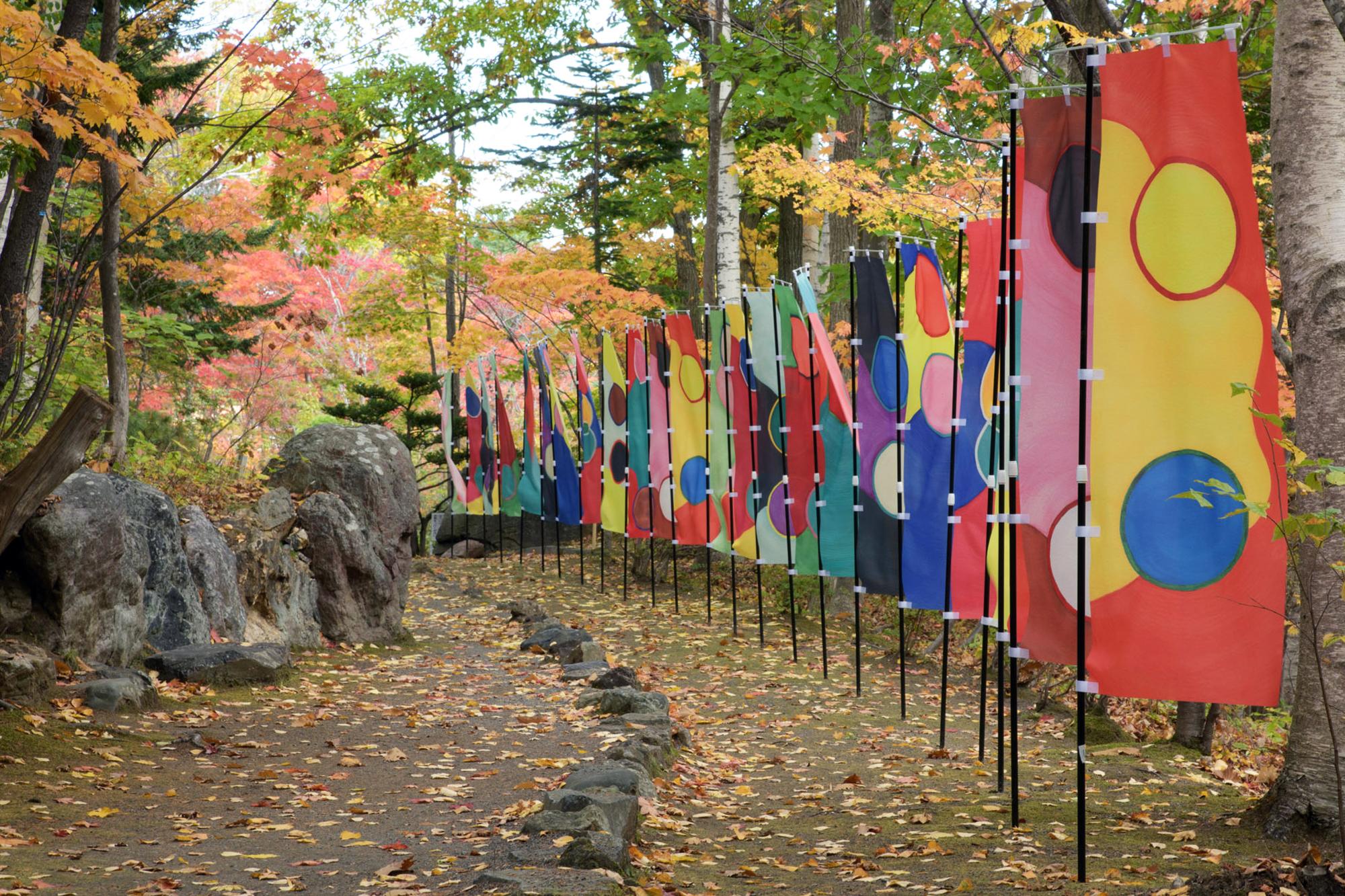
Noboru, 2021, courtesy of Benizakura Art Annual, Crossing Water: Encounter of Hokkaido & Okinawa
Event Information
- Date
- October 30 (Fri), 2026 - November 16 (Mon), 2026
- Time
- Hours: 10:00-18:00 (until 20:00 on Fridays and Saturdays)
Overnight Opening: On October 31 (Sat) only, the area from the Main Gate to the Main Entrance will be open throughout the night.
Closed: November 4 (Wed) and November 10 (Tue) - Venue
- In front of the Main Entrance, The National Art Center, Tokyo (outdoors)
- Organized by
- Tokyo Metropolitan Government; Arts Council Tokyo (Tokyo Metropolitan Foundation for History and Culture); Minato City; and the Roppongi Art Night Executive Committee (The National Art Center, Tokyo; Suntory Museum of Art; Tokyo Midtown; 21_21 DESIGN SIGHT; Mori Art Museum; Mori Building Co., Ltd.; and Roppongi Shopping Street Promotion Association)
- Inquiries
- Roppongi Art Night Executive Committee
Information Service: +81-50-5541-8600 (9:00-20:00)
About the Artworks
Aya Rodriguez-Izumi
Conceptual flag for an intersecting future
Noboru
Aya Rodriguez-Izumi presents two types of nobori banners at the entrance roundabout and the façade of the National Art Center, Tokyo. Today, nobori banners are commonly used for street advertising and promotional purposes. Historically, however, they were used as military standards during Japan’s Warring States Period (the 15‒16th century) to distinguish allies from enemies. Noboru (2021), installed in the roundabout, takes as its motif the circular national insignia painted on aircrafts such as fighter planes of the Imperial Japanese military. Paintings made with sumi ink and watercolor are printed onto the nobori banners. Each banner bears two circles of different colors, expressing the meeting of multiple cultures within a single flag. Installed along the art center’s exterior wall is Conceptual flag for an intersecting future (2026), newly created for Roppongi Art Night 2026. The work is based on the patterns and colors of Ryukyu bingata, a traditional Okinawan dyeing technique tied to the artist's roots. Up close, the design on each flag is different, but from a distance they come together as a single landscape. The sight of many flags rippling in the wind suggests a layered future born not from a single nation or ethnic group, but from the intersection of many cultures and histories.
Artist Profile
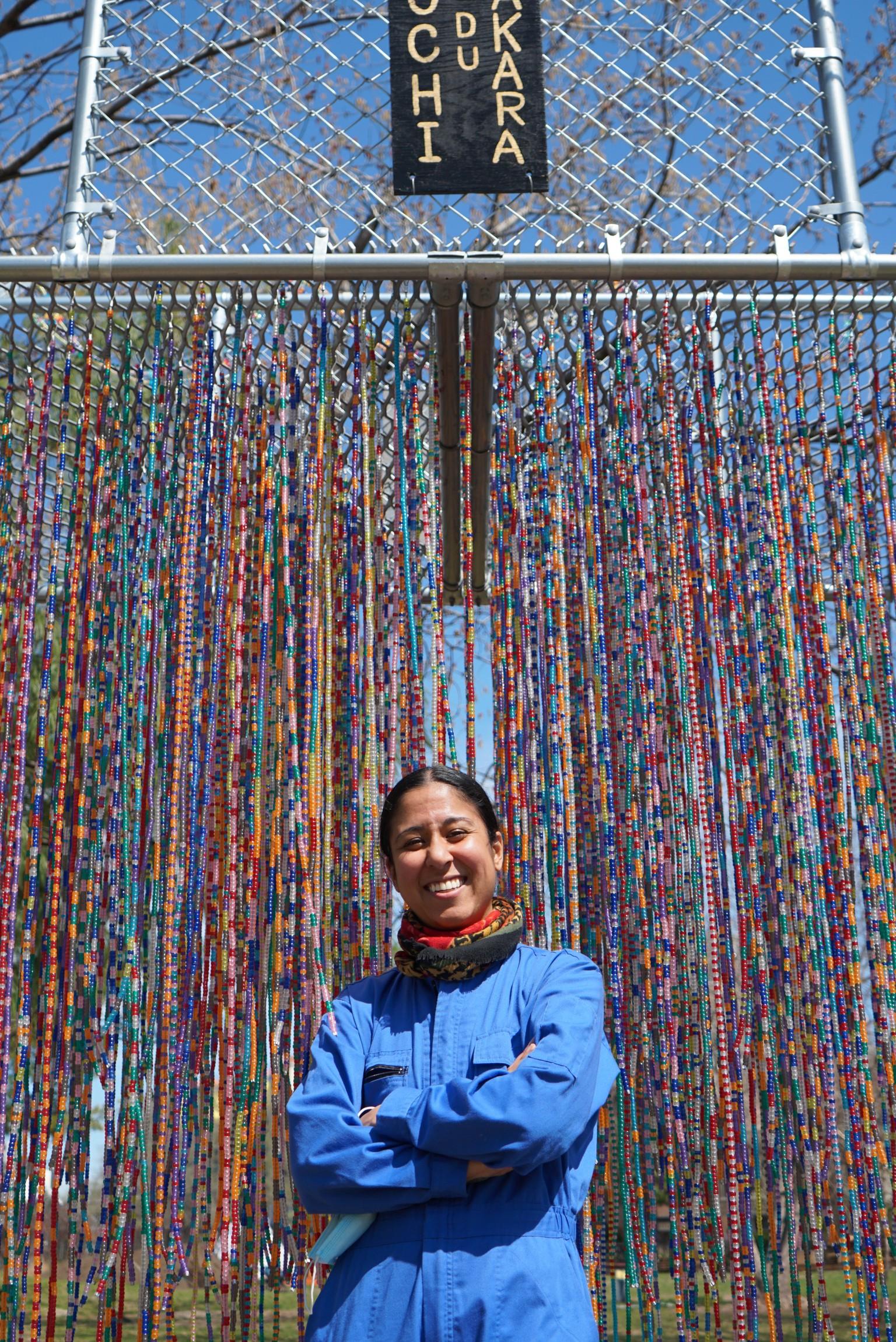
Photo: Alexander Bustamante
Aya Rodriguez-Izumi
Born in Okinawa, Japan, in 1986, and based in New York. Aya Rodriguez-Izumi holds an MFA degree from the School of Visual Arts, New York. With roots in Okinawa, Cuba, and Puerto Rico, she works across sculpture, video, installation, performance, and community collaboration, exploring themes such as the succession of rituals, disappearing histories, and identities grounded in multiple cultures. She was a 2019 U.S.- Japan Creative Artist Fellowship Program Fellow. Major exhibitions include Signals (New Harmony Gallery of Contemporary Art, Indiana, USA, 2026) and the Singapore Biennale 2025. In Japan, her exhibitions include Yambaru Art Festival 2024‒2025 (Okinawa), Tidal (miyagiya, Okinawa, 2021), and Benizakura Park Art Annual 2021 (Hokkaido). Aya Rodriguez-Izumi

